Rebuilding a Fragmented WooCommerce Store
E-commerce / Web Design / SEO / WooCommerce / Performance Optimization
From a Fragmented Store to a Clearer Shopping Experience
A five-month e-commerce recovery encompassing site architecture, product SEO, checkout optimization, performance troubleshooting, brand consistency, and legacy integration protection. I reorganized the catalog around brands and product categories to make browsing clearer and simplified the checkout experience. Behind the scenes, I addressed database issues and developed a custom integration plugin to support product updates between TradeGecko and WooCommerce.
Project Overview
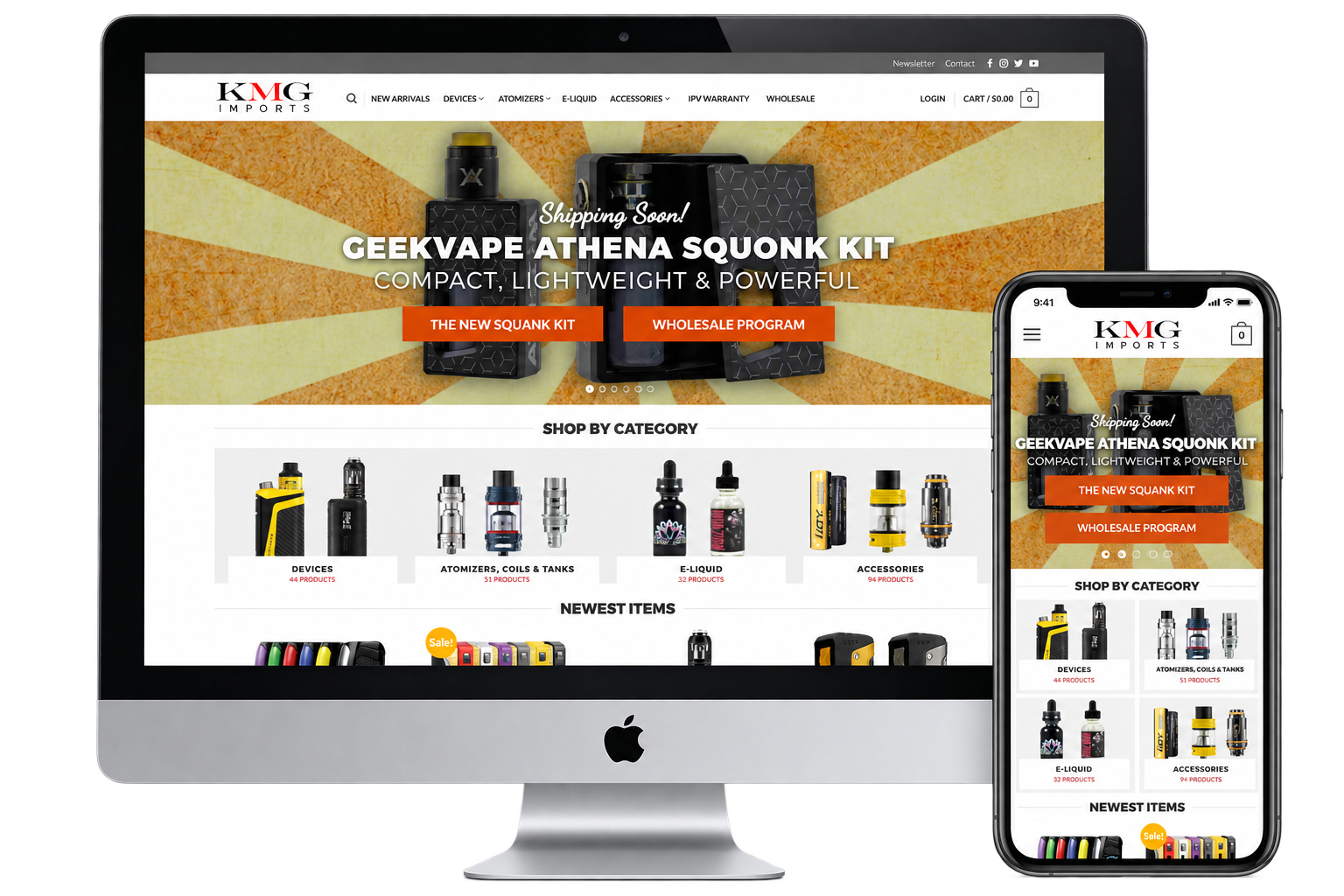
KMG Imports is an e-commerce company specializing in e-cigarette and vaping products. The company operates as both a wholesale distributor and a direct-to-consumer retailer. During a five-month engagement as its full-time Web Designer and SEO Specialist, I rebuilt the company’s difficult-to-navigate online store using WordPress and WooCommerce. The project extended well beyond visual design. I reorganized the product catalog, improved product information and search visibility, addressed database-related performance problems, simplified the checkout experience, updated the visual identity, and developed a custom solution to protect a legacy TradeGecko integration. Within two weeks of the relaunch, website traffic increased by 80%.
Challenge
The existing website had accumulated structural, content, and technical problems that made it difficult for both customers and employees to use.
Customers lacked a clear way to browse the catalog by brand, category, or individual product. Many listings contained missing or inaccurate images, incomplete descriptions, and inconsistent categorization. These gaps made product comparison more difficult and limited the information available to search engines.
Database errors affected site performance, while the checkout presented too many shipping choices. The order and default behavior of those choices could also leave customers with an unexpected shipping selection.
Behind the storefront, the business depended on a legacy TradeGecko integration. Its update schedule was not always synchronized with WooCommerce, creating a risk that an automatic update could disrupt an operational e-commerce system.
The company also lacked consistent visual standards across its website, logo, and printed product materials.
My Skills
I worked as a Web Designer, E-Commerce UX Specialist and SEO Technical Specialist.
WordPress
Designed, developed, and maintained responsive WordPress websites across multiple iterations of the organization’s digital presence.
WooCommerce
Reorganized the product catalog, improved product listings, and simplified checkout to make the store easier to shop and maintain.
Hosting Upgrade
Moved the store to more reliable hosting and resolved database issues that were affecting site performance.
E-Commerce UX
Simplified product discovery and checkout so customers could find what they needed, compare options, and choose shipping with confidence.
Third-Party Integrations
Developed a custom solution to prevent WooCommerce updates from disrupting the store’s legacy TradeGecko inventory integration.
Style Guide
Created shared standards for typography, color, imagery, and branding across the website and printed materials.
Creating a clearer shopping structure
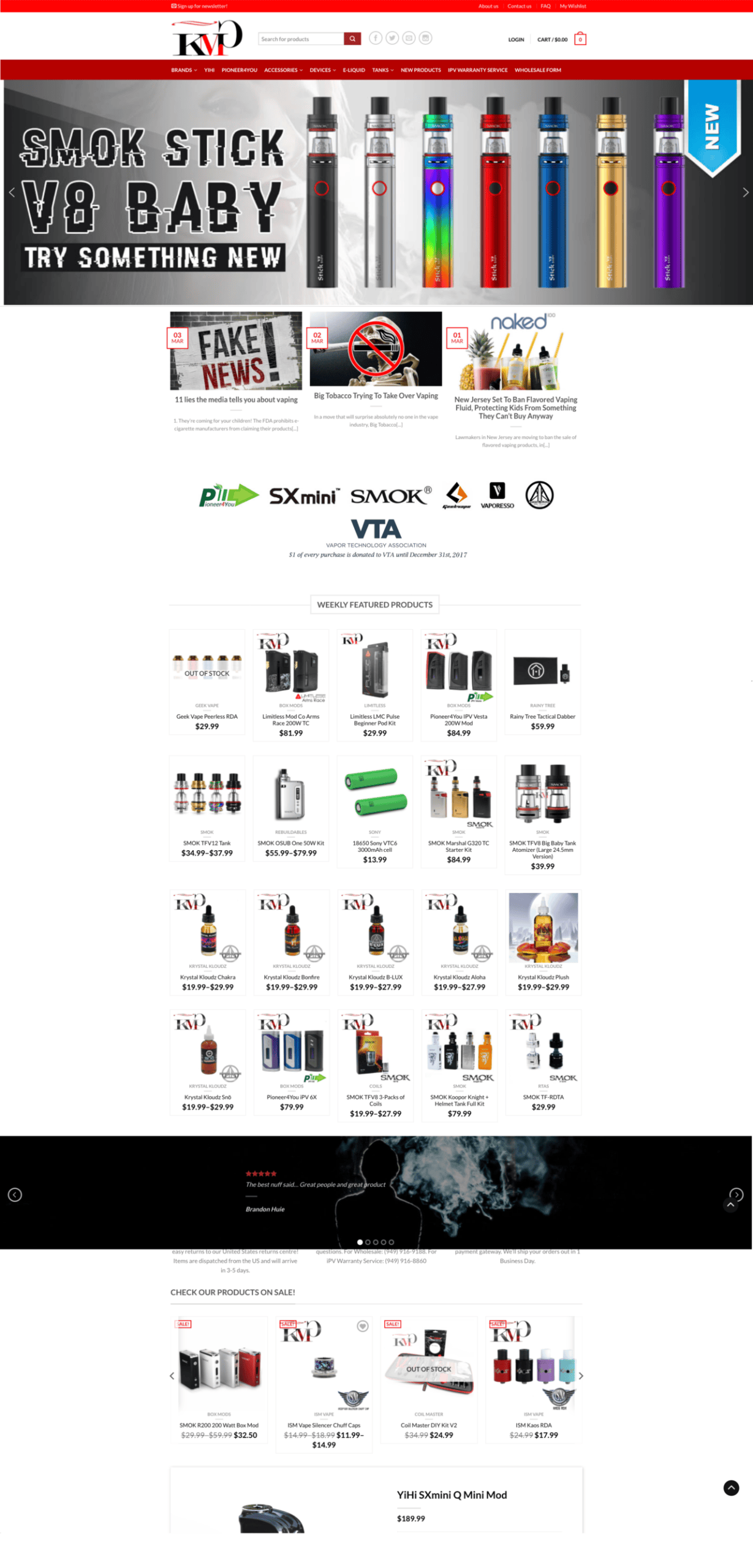
I rebuilt the information architecture around the ways customers were most likely to shop: by brand, product category, and individual item.
The new structure created clearer paths through the catalog and made relationships between brands and products easier to understand. It also provided a more scalable foundation for adding products and organizing future inventory.

Strengthening product content and SEO
I audited individual product listings and corrected missing or inaccurate information. This included adding appropriate product images, improving descriptions, and assigning products to useful categories.
SEO was incorporated into the product structure rather than treated as a separate task. More complete listings gave search engines better information to index while helping customers understand and compare the products they were considering.
Simplifying checkout and shipping
The existing checkout included an unnecessarily complicated selection of shipping options. Their ordering and default behavior could also lead customers to proceed with an option they did not expect.
I reduced the available selections to three clearly presented shipping methods:
- Standard Shipping
- Expedited Shipping
- Overnight Shipping
I also corrected their ordering and presentation so customers could more easily understand the selected method before completing a purchase.
Establishing brand consistency
Alongside the website rebuild, I updated the company logo, redesigned printed product materials, and created a company style guide.
The style guide established shared standards for colors, typography, imagery, and other visual elements across digital and printed materials. I also mentored junior designers in applying those standards and following more consistent web design and development practices.
The outcome
Website traffic increased by 80% within two weeks of the relaunch.
- A clearer and more scalable product architecture
- More complete and accurate product listings
- A stronger foundation for organic search visibility
- A simpler, more understandable checkout experience
- Resolution of database-related performance problems
- Greater control over legacy integration updates
- A consistent visual system for digital and printed materials
- Documented standards the internal team could continue using
What began as a website redesign became a broader e-commerce recovery—addressing customer experience, product content, technical stability, checkout friction, brand consistency, and the internal practices required to maintain the system.
Skills demonstrated
- WordPress development
- Product content strategy
- E-Commerce UX
- SEO optimization
- Checkout flow improvement
- Database performance tuning
- Integration management
- Visual design system implementation
- Internal documentation and standards