UX Lessons from Cowboy Boots
Working part time on the sales floor has changed how I think about UX. Helping people choose boots has reinforced the value of listening, explaining choices clearly, and giving customers the confidence to decide for themselves.
Working part-time selling cowboy boots
For years, I’ve worked on websites and digital tools, thinking about how people find information, compare options, and make decisions. More recently, I’ve been doing something that sounds quite different: working part-time as a sales associate in a boot store.
The two experiences have more in common than I expected
On the sales floor, people rarely arrive with a perfectly formed request. Someone might ask for a particular style, but that’s only the start of the conversation. Where will they wear the boots? How much walking will they do? Have they owned a pair before? What do they like about the pair they picked up, and what makes them hesitate?
Those questions aren’t a script to get through. They help me understand what the person is trying to accomplish. That’s the same starting point I want in a design project. A customer’s first request matters, but so does the need behind it.
I’ve also learned how much confidence affects a decision. Boots can feel unfamiliar, especially to someone buying their first pair. They may be unsure how a boot should fit, whether a style feels like them, or how to choose between two options they like. A useful explanation can make the decision easier. So can giving someone room to try a different size, walk around, and decide for themselves.
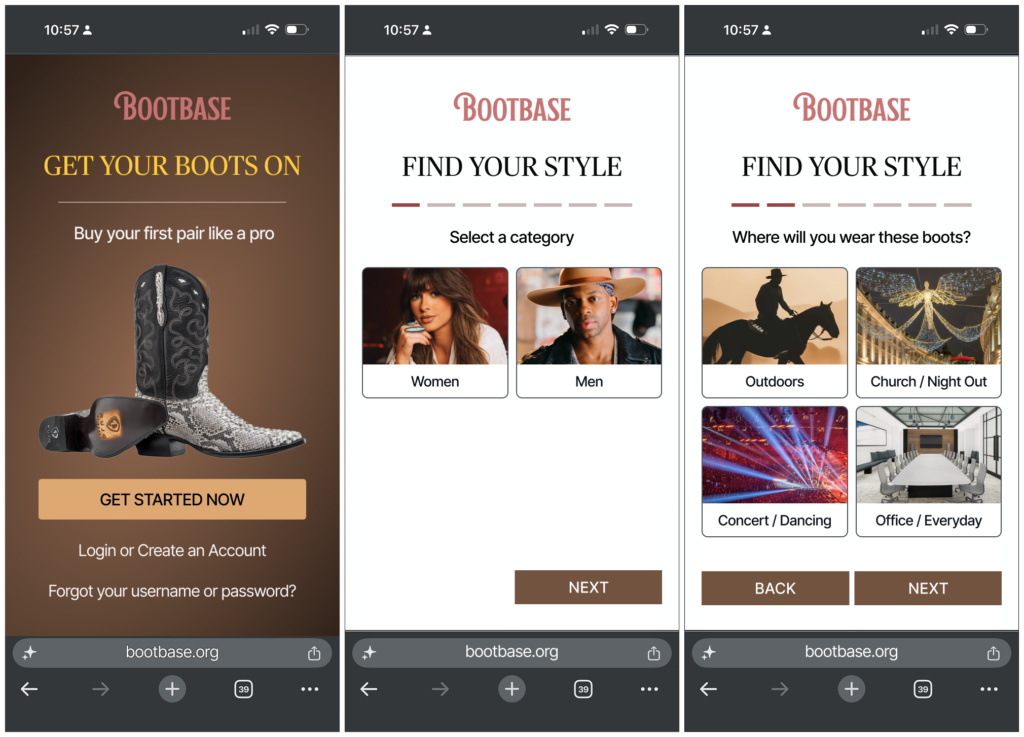
UX Case Study: Bootbase — Translating Personal Style into Structured Data
WordPress Website: Bootbase — Designing a Smarter Way to Discover Cowboy Boots
Buying cowboy boots online can feel risky
Digital experiences ask people to make similar judgments, often without another person nearby to help. Is this the right product? What happens if I choose this option? Am I missing something important? When a website answers those questions clearly, it does some of the work a good associate does in person.
The sales floor has also made me more aware of the gap between a tidy category and a real person. A customer may come in with a style in mind, then discover they prefer something entirely different once they try it on. Another may love how a boot looks but need something that works better for the way they’ll use it. Neither person is being inconsistent. They’re learning as they go.
That’s a useful reminder for UX work. We can organize choices and make thoughtful recommendations, but we should leave room for people to explore and change their minds.
One of my favorite parts of the job is seeing the moment someone finds a pair that feels right. Sometimes the decision comes quickly. Sometimes it takes patience, questions, and a few trips back to the shelves. Either way, I’m reminded that the goal is to help someone make a choice they feel good about after they leave the store.
Working part time has given me a new appreciation for the skill involved in serving customers well. You have to listen closely, know your products, explain things plainly, and adjust to the person in front of you. You also have to recognize when they need help and when they need space.
I’m bringing those lessons back to my design work. I want to build experiences that answer useful questions at the right time, make choices easier to understand, and respect the fact that people don’t always know exactly what they need when they begin.
I still enjoy working through a complex website or interface. Now, when I do, I can picture the person on the other side of it a little more clearly.