When Removing a Freeway Improved the Experience
San Francisco’s Embarcadero Freeway promised better connections but separated downtown from its waterfront. Its removal offers a lesson in urban UX: question inherited systems, understand who depends on them, and consider what people could gain when something familiar is taken away.
A brief UX case study of San Francisco’s Embarcadero
A driver and a pedestrian could experience the same waterfront in completely different ways. For the driver, San Francisco’s Embarcadero Freeway offered a convenient elevated route. For someone on the ground, its two decks of concrete stood between downtown and the bay.
That difference makes its removal an interesting UX case study. A system can serve one group while making life harder for another—and familiarity can make those tradeoffs seem permanent.
The original promise
The Embarcadero Freeway opened in 1959 as part of an ambitious plan to connect the Bay Bridge and Golden Gate Bridge. The aspiration was understandable: move vehicles efficiently through San Francisco and make regional travel easier. But public opposition stopped the planned extension, leaving a waterfront segment that never fulfilled its intended bridge-to-bridge role.
The experience on the ground was harder to celebrate. The structure obscured the Ferry Building and divided downtown from its waterfront. Criticism arrived almost immediately; even Mayor George Christopher publicly regretted the project in its opening year.
Through a UX lens, the problem was the narrow definition of success. Moving cars mattered. So did reaching the waterfront, seeing the city, and spending time in its public spaces.
An unwanted feature people depended on
Removing the freeway was not an obvious or universally popular solution. In 1986, voters rejected a proposal to replace it with a landscaped boulevard. People had built routines around the existing route, and the promise of a better waterfront competed with the fear of worse traffic.
Those concerns were about livelihoods as well as convenience. Chinatown merchants feared losing customers who relied on freeway access. Their opposition is an essential part of the story: a redesign that benefits one area can introduce real uncertainty somewhere else.
Anyone who has modernized a legacy application will recognize the tension. Users may dislike a system and still depend on it. Understanding that dependency matters more than persuading them that the replacement looks better.
The earthquake changed the decision
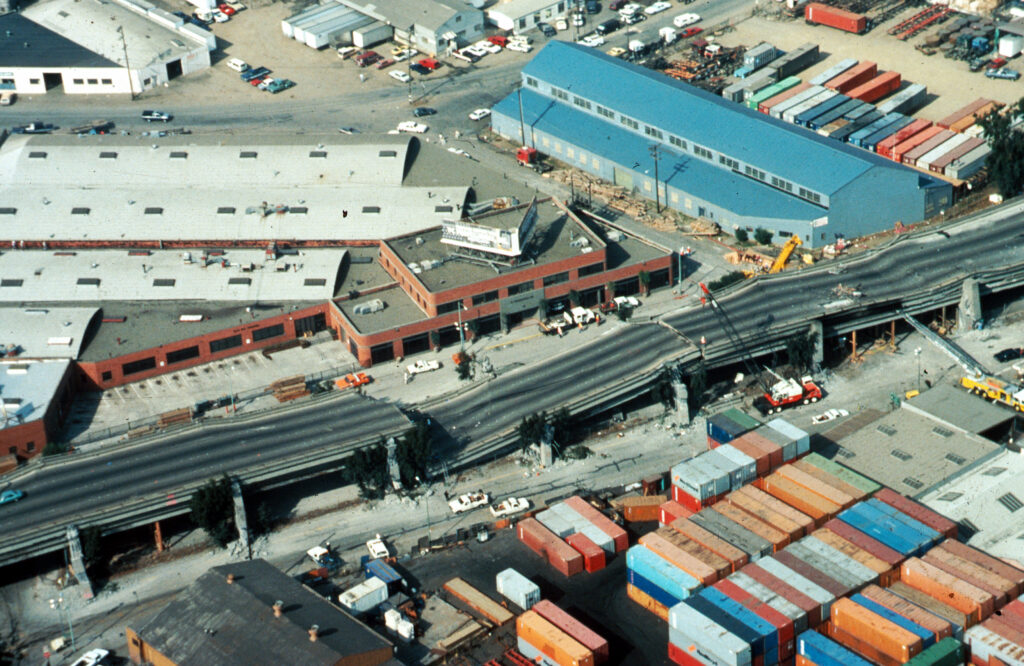
On October 17, 1989, the Loma Prieta earthquake turned a long-running debate about traffic and waterfront access into an urgent question of safety.
Across the bay in Oakland, the double-deck Cypress Street Viaduct on Interstate 880 collapsed, killing 42 people. Its upper deck fell onto the roadway below, crushing vehicles. Images of the wreckage and desperate rescue efforts reached audiences around the world. An everyday commute had become a catastrophe.
The Embarcadero Freeway was damaged, but it did not collapse like the Cypress structure. Still, the Oakland disaster gave fears about aging double-deck freeways a devastating, visible context. For San Francisco, the decision now involved both the cost of restoring its own structure and the confidence people could place in it. The city’s planning history identifies earthquake damage and high repair costs as reasons for choosing demolition.
The financial comparison was consequential. According to the Congress for the New Urbanism, estimates evolved from roughly $15 million for strengthening to $69.5 million for reconstruction, while the replacement boulevard ultimately cost less than $50 million. These historical figures cover different project scopes rather than a single demolition price.
Mayor Art Agnos championed removal, and demolition began on February 27, 1991. The earthquake had forced the city to revisit a familiar piece of infrastructure—and ask whether restoring it was still the right investment.
From a UX perspective, this illustrates how a serious failure can change people’s relationship with a system. Familiarity offers reassurance only while people trust what they depend on. Modernization must address that trust alongside functionality, cost, and convenience.
What people gained
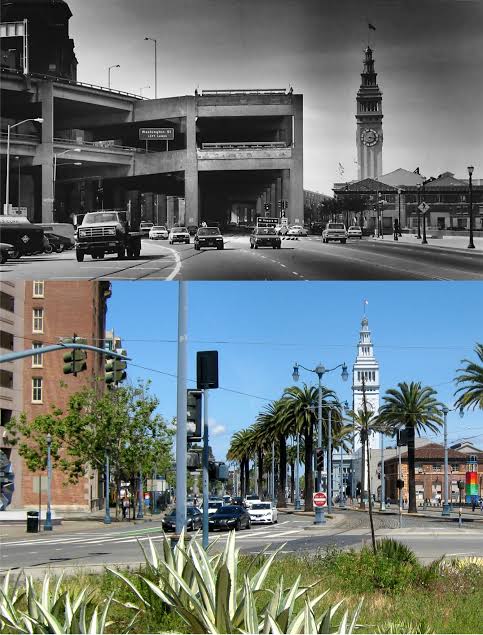
The most immediate change was simple: downtown could see the waterfront again. Removing the elevated structure, alongside improvements to lighting, landscaping, sidewalks, and public spaces, renewed interest in the Embarcadero.
The replacement retained road access while accommodating rail transit and a waterfront promenade. The Congress for the New Urbanism reports that initial congestion did not become permanent traffic disruption, with surrounding streets absorbing substantial traffic. That does not mean every journey became easier; it means the city continued functioning without the structure many people considered indispensable.
Over time, the restored Ferry Building, public spaces, and waterfront redevelopment helped turn the area into a destination. San Francisco’s own account describes the transformation as both a reconnection to the bay and an economic renewal. Those benefits came from removal combined with sustained investment—not demolition alone.
The lesson for legacy UX
For me, the Embarcadero story raises a useful question: Are we improving the existing system, or improving the experience people need from it?
In legacy software, we often inherit features whose original purpose has faded, along with users who still depend on them. The responsible response is to investigate those dependencies, provide alternatives, and measure outcomes beyond the performance of the old feature.
San Francisco’s waterfront shows what becomes possible when the brief changes. The freeway’s job was to move people through the city. The redesigned Embarcadero also gave them reasons to arrive, explore, and stay.